
Wind-Damaged Fascia & Soffit Repair
Fascia blown off after high winds? Loose aluminum trim, a missing corner, or detached soffit panels can leave the roof edge exposed. REV coordinates small fascia and soffit repair requests in Downers Grove, Darien, Westmont, Hinsdale, Burr Ridge, Naperville, Hinsdale, Western Springs and nearby southwest and western Chicago suburbs. Send safe ground-level photos to start a scope review; the contractor confirms the cause, repair approach, price and availability before you agree to work.
REV coordinates your project. Work is subcontracted to appropriately licensed and insured contractors; contractor credentials and project terms are confirmed before work begins.
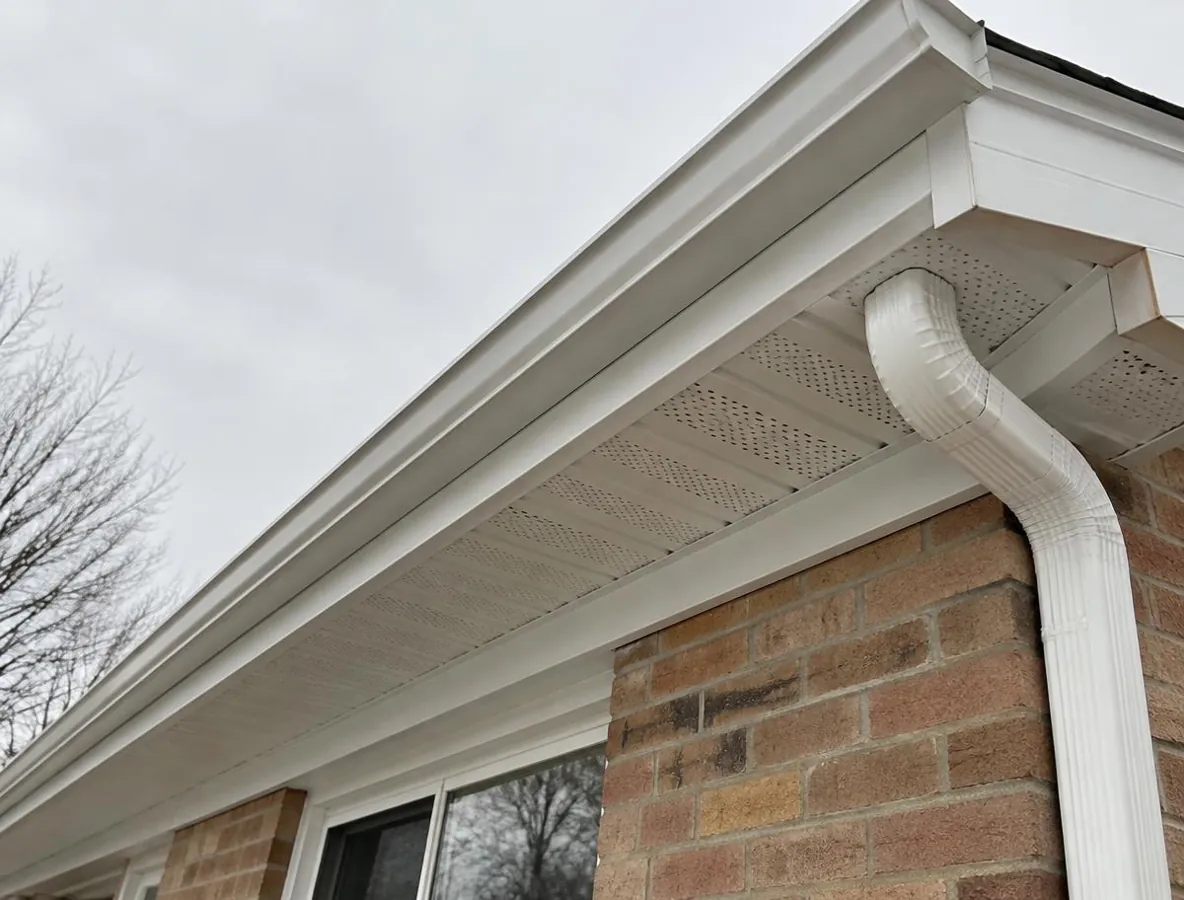
Wind-blown fascia: one missing piece or a longer run
The fascia is the vertical board at the roof edge; aluminum fascia wrap covers its face, while soffit panels close the underside of the eave. Wind can loosen coverings or expose an existing attachment problem. A contractor should check the remaining fasteners, underlying wood, adjacent soffit and gutter support before replacing the missing section. One detached piece does not automatically mean the whole house needs new fascia. Tell REV which side is affected, whether it is a first- or second-story eave, and whether anything is still hanging. Keep people away from loose material; do not pull it down yourself.
Trace the moisture before covering the wood
Rot at the eave can follow gutter overflow, a roof-edge leak, missing flashing, or repeated exposure at an unprotected joint. Wrapping deteriorated material without resolving the moisture source can hide continuing damage. A useful assessment considers the gutter, roof edge, fascia, sub-fascia, and nearby framing as connected parts. The proposal should state what visible wood will be replaced and how concealed conditions will be handled if more deterioration is uncovered after removal.
Fascia boards, sub-fascia, and aluminum wrap
Aluminum wrap provides a finished surface, but it does not replace structural support that gutter fasteners rely on. Soft boards or damaged rafter tails need appropriate evaluation before new coverings are installed. Material profiles, bends, and color selections affect how water drains at edges and corners. Ask how joints will be arranged and whether the gutter must be temporarily removed. Coordinating those details can be more useful than choosing a wrap solely because it reduces future painting.
Soffit ventilation and openings
Vented soffit can provide intake air for an attic when there is a clear path into the roof assembly. Panels alone will not restore airflow if insulation blocks the space behind them. Solid and vented sections should suit the existing design. Openings can also allow animals or insects into roof-edge cavities; closing them should follow an appropriate exclusion plan so animals are not trapped inside. Loose panels, staining, and gaps deserve inspection, but do not reach into unknown cavities yourself.
Choose an appropriate repair size
A localized corner repair may suit a home with otherwise sound roof-edge materials. Repeated rot along multiple sides can point toward broader water-management or attachment problems. Compare the affected length, access, removal requirements, and gutter work rather than using a generic per-foot price as a final quote. Safe ground-level photos of the eave and the whole wall help explain the location. A close-up is useful only when it can be obtained without climbing or disturbing an unstable section. Mention animal activity, prior wrapping, or gutter repairs at the affected location. Those details can help explain why the same corner has needed attention more than once.
Frequently asked questions
Can you replace one piece of wind-blown fascia?
A localized repair may be possible if the surrounding material and support are sound. Send a ground-level photo of the missing piece and a wider view of that side of the home. The contractor confirms fastening, material and color options, access, price and availability before work is agreed.
What photos help with loose fascia or detached soffit?
Take one wider view showing the wall and roof edge, then a zoomed view of the damaged section from a safe place on the ground. Mention loose gutters or hanging trim in your notes. Do not climb a ladder, stand below unstable material or attempt to refasten it for the photo.
Does wind-blown fascia qualify for an insurance claim?
Photos or a missing fascia piece alone do not establish the cause, date of loss or insurance coverage. A contractor can document physical conditions; your insurer determines coverage under your policy. REV coordinates repair requests and does not negotiate claims or promise approval.
Can you repair one rotted corner?
A small repair can be discussed when damage is localized. The scope may include the visible fascia, hidden support, soffit, and gutter attachment depending on what is found. Covering rotten wood alone is not an appropriate substitute for evaluating it.
Will new vented soffit fix an attic problem?
It may be one part of an airflow improvement, but blocked intake paths, exhaust ventilation, insulation, and indoor air leakage also matter. The appropriate solution depends on the complete assembly, not simply adding more perforated panels.
Is aluminum wrap the same as replacing fascia?
No. Wrap is an exterior covering. Existing boards and supporting material must be suitable for it. Ask whether the proposal includes wood replacement and how hidden deterioration will be documented before approving an aluminum-wrap project.
Related exterior services
Nearby communities we serve
Let’s handle the problem.
Tell REV what needs attention. Photos can start the discussion; we confirm the scope, price, and availability before work is agreed.
Snap a photo and request an estimate online